
PalaceFurther out, by bus
Castello della Cuba
2,5 km from the locker, by public transport
The story
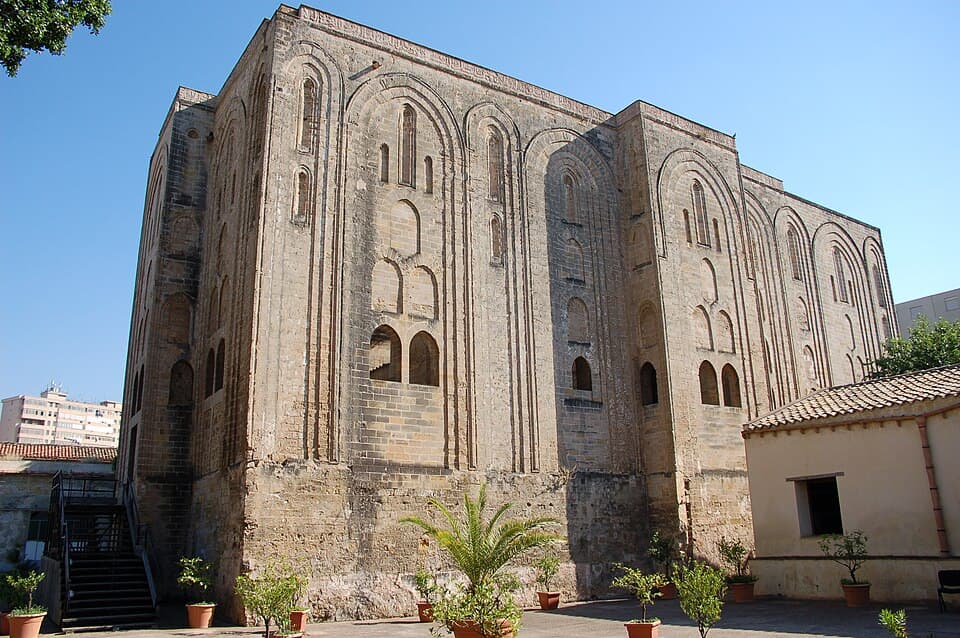
The Cuba was built in 1180 by William II, as recorded in the Arabic inscription running beneath the battlements. It stood at the centre of a large artificial lake in the Genoard park, together with the Zisa: a pavilion for the king’s leisure, with pools, fountains and a central hall open to the sky.
The architecture follows Fatimid models from North Africa: a rectangular plan, projecting towers on the sides, tall blind arches, muqarnas in the corners. Boccaccio chose it as the setting for a tale in the Decameron, the story of Gian di Procida and Restituta.
Over the centuries it became a lazaretto and then a cavalry barracks: to this day you enter through the courtyard of the Tuköry barracks on corso Calatafimi. It has been part of the Arab-Norman UNESCO site since 2015.
Why it is worth it
It feels odd to cross a barracks courtyard to reach a 12th-century palace, and that very oddness is what makes the visit memorable. Inside it is an empty shell of golden stone, roofless, with the sky for a ceiling: look at the muqarnas niches in the corners and picture the water that once surrounded it. It is more intimate than the Zisa, and often you have it to yourself.
Leave your bags here and travel light
Self-service locker at Via Villareale 31, opened with your booking code.
Book a locker